

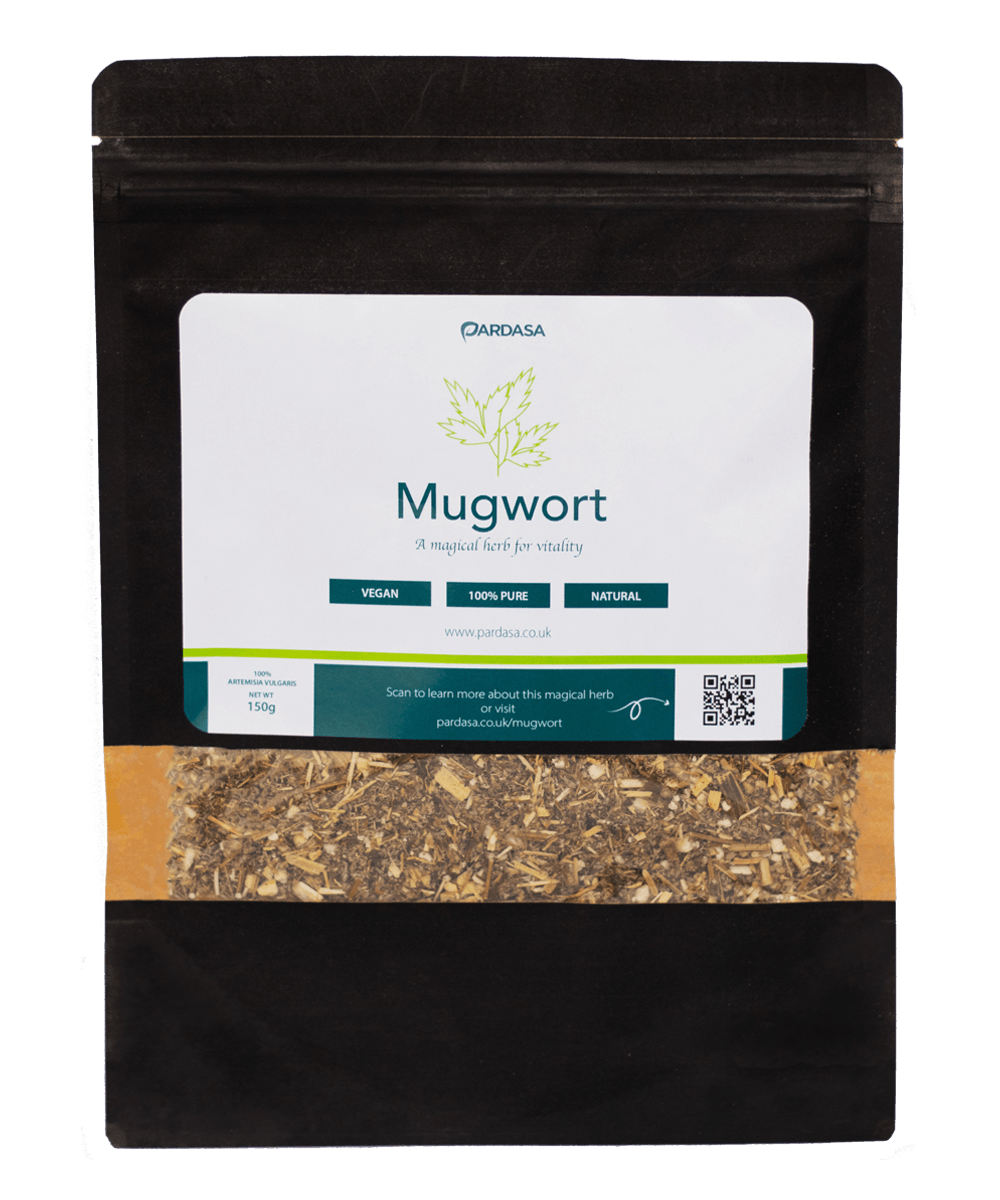
Dried Mugwort Leaves
Whole dried mugwort leaves, selected for a clean aroma and cut for the teapot. One of Europe's oldest evening herbs, brewed at dusk for centuries and kept under pillows for as long.
- One ingredient. 100% Artemisia vulgaris, nothing added
- Whole leaf, loose. You see the herb you are brewing, and one pouch makes around a hundred cups
- An evening tradition. The old European dream herb, brewed before bed and sewn into dream pillows
- Beyond the teapot. Works as a bath soak and a scented sachet as well as a tea


Dried Mugwort Leaves
Whole dried mugwort leaves, selected for a clean aroma and cut for the teapot. One of Europe's oldest evening herbs, brewed at dusk for centuries and kept under pillows for as long.
- One ingredient. 100% Artemisia vulgaris, nothing added
- Whole leaf, loose. You see the herb you are brewing, and one pouch makes around a hundred cups
- An evening tradition. The old European dream herb, brewed before bed and sewn into dream pillows
- Beyond the teapot. Works as a bath soak and a scented sachet as well as a tea

An Evening Tradition
Mugwort has been Europe's evening herb for as long as records go back: brewed at dusk, sewn into dream pillows, hung over doorways at midsummer. We sell it for that tradition.
The leaves are dried whole, selected for a clean aroma, and cut so they brew evenly in a pot.
Three Ways To Use It
Steep 1 to 2 teaspoons in 240ml of freshly boiled water for 5 to 15 minutes. Honey or maple syrup softens the herbaceous edge.
Tie a handful into a muslin bag and drop it into a warm bath.
Fill a small cloth sachet and tuck it under your pillow, the way it has been done for centuries.
One Herb, Nothing Added
Every pouch holds one ingredient: dried Artemisia vulgaris leaves. No blends, no flavourings, no fillers.
We choose our herbs the way we choose our sea moss, simply and traceably, and we would rather tell you exactly what is in the pouch than make promises about what it will do.
Frequently Asked
How do I brew it?
Steep 1 to 2 teaspoons of leaves in 240ml of freshly boiled water for 5 to 15 minutes. A tea basket helps the leaves circulate for a fuller flavour, and the longer the steep, the more robust the cup.
What does it taste like?
Gently bitter and herbaceous, close to sage. That is why the honey earns its place.
What is mugwort traditionally used for?
Folklore gives mugwort a long evening history: brewed as a dusk tea, sewn into dream pillows, and added to bath water. We sell it for the tradition, not for any medical purpose.
Who should avoid it?
Mugwort is not recommended during pregnancy or while trying to conceive. Avoid it if you are allergic to ragweed or other plants in the daisy family, and check with your GP if you take prescription medication.
How long does it keep?
Up to 12 months in a cool, dry place away from direct sunlight, sealed after each use.
Can I use it beyond tea?
Yes. Tie a handful into a muslin bag for a bath soak, or fill a small sachet for a traditional dream pillow.
Mugwort: History and How to Brew It
A thousand years of folklore, a place in kitchens from Korea to Bavaria, and how to make a proper cup. Our full guide to the herb.
Read now